


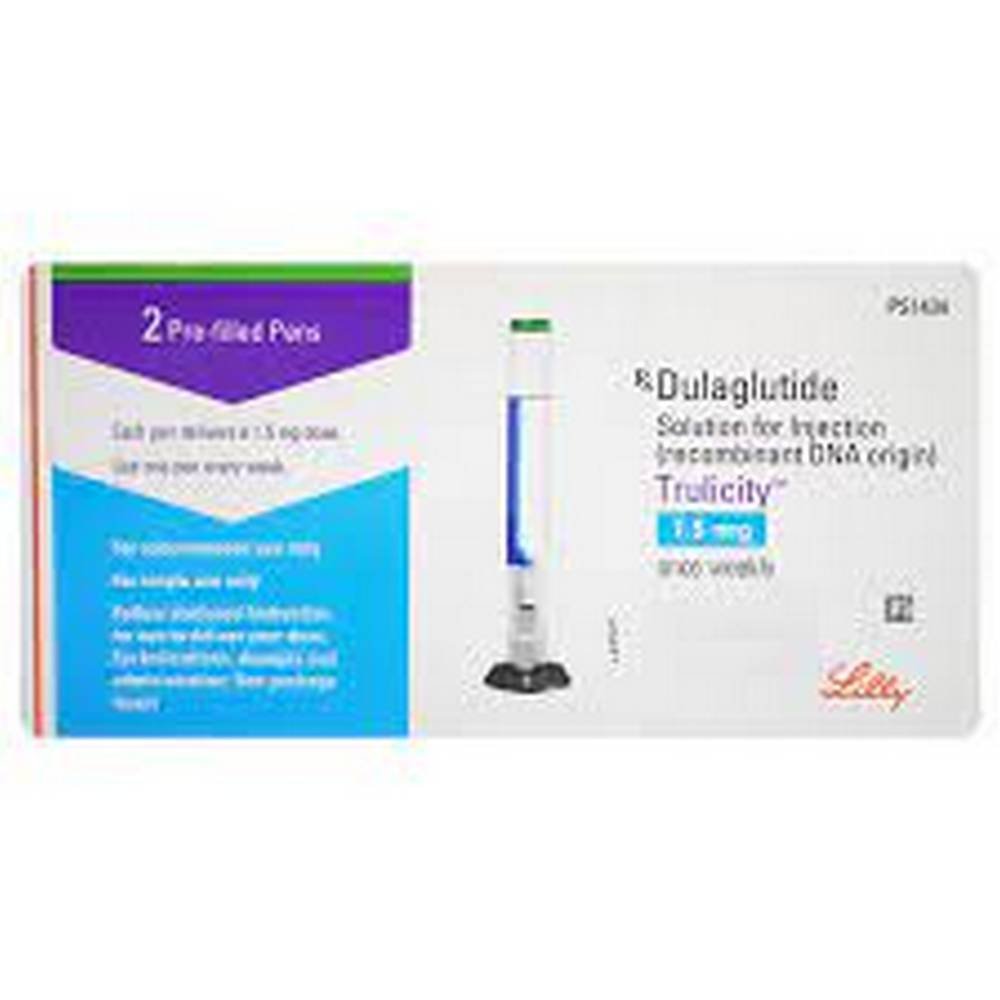



Indications
Trulicity® is indicated in adult patients with type 2 diabetes mellitus with inadequate glycemic control during diet and exercise:
as monotherapy in patients who are not shown the use of metformin due to intolerance or contraindications;
as a combination therapy in combination with other drugs for the treatment of diabetes mellitus.
Trulicity® is indicated to reduce the risk of serious cardiovascular complications (cardiovascular death, non-fatal myocardial infarction, non-fatal stroke):
in adult patients with type 2 diabetes mellitus and multiple cardiovascular risk factors without diagnosed cardiovascular disease;
in adult patients with type 2 diabetes mellitus and diagnosed cardiovascular disease as an adjunct to standard cardiovascular disease therapy.
Contraindications
hypersensitivity to the active or any of the excipients that make up the drug;
diabetes mellitus type 1;
diabetic ketoacidosis;
end-stage renal disease (GFR<15 ml/min/1.73 m2);
chronic heart failure (CHF) III or IV functional class (according to the classification of the New York Heart Association, NYHA);
severe diseases of the gastrointestinal tract (GIT), incl. severe paresis of the stomach;
acute pancreatitis;
in patients with a personal or family history of medullary thyroid cancer;
in patients with multiple endocrine neoplasia syndrome type 2;
pregnancy;
breastfeeding period;
age up to 18 years (due to the lack of data on the efficacy and safety of dulaglutide in this age group).
With caution: patients taking oral drugs that require rapid absorption in the gastrointestinal tract; patients with CHF I and II functional class (according to the NYHA classification).Description of the dosage form
Clear colorless solution.
Pharmacokinetics
Suction. After subcutaneous (s / c) administration to patients with type 2 diabetes mellitus, the maximum concentration (Cmax) of dulaglutide in plasma is observed after 48 hours. under the concentration-time curve (AUC) were approximately 114 ng/ml and 14,000 ng h/ml, respectively. Steady-state plasma concentration (Css) was observed after 2-4 weeks of administration of dulaglutide at a dose of 1.5 mg once a week. Concentrations after subcutaneous administration of a single dose of dulaglutide (1.5 mg) in the abdomen, thigh or upper arm were comparable. The average absolute bioavailability of dulaglutide after a single subcutaneous injection at a dose of 1.5 or 0.75 mg was 47 and 65%, respectively.
Distribution. After subcutaneous administration of dulaglutide at doses of 0.75 or 1.5 mg to patients with type 2 diabetes mellitus at steady state, the mean Vss was approximately 19.2 and 17.4 liters, respectively.
Metabolism. Dulaglutide is thought to be broken down into its constituent amino acids via major protein catabolism pathways.
Withdrawal. The average clearance of dulaglutide in humans at steady state after administration at doses of 0.75 or 1.5 mg was 0.111 and 0.107 l / h, respectively, with a half-life (T1 / 2) of 4.5 and 4.7 days, respectively.
Special patient groups
Elderly patients. The patient’s age did not have a clinically significant effect on the pharmacokinetic and pharmacodynamic properties of dulaglutide.
Gender and race. Gender and race did not have a clinically significant effect on the pharmacokinetics of dulaglutide.
Body weight or body mass index (BMI). Pharmacokinetic analysis showed a statistically significant inverse relationship between body weight or body mass index (BMI) and dulaglutide exposure, but there was no clinically significant effect of body weight or BMI on glycemic control.
Patients with renal insufficiency. The pharmacokinetics of dulaglutide was evaluated during a clinical pharmacological study, in general, it was similar in healthy participants and patients with mild to severe renal impairment (Cl creatinine <30 ml / min), including end-stage renal disease (during hemodialysis). Additionally, in a 52-week clinical study in patients with type 2 diabetes mellitus and moderate to severe renal insufficiency (15 ml / min / 1.73 m2 ≤ GFR < 60 ml / min / 1.73 m2), the pharmacokinetic profile of dulaglutide in the dose of 0.75 and 1.5 mg once a week was similar to that noted in other studies of dulaglutide. This study did not include patients with end-stage renal disease.
Patients with liver failure. The pharmacokinetics of dulaglutide was evaluated in a clinical pharmacological study in which a statistically significant decrease in mean Cmax and AUC by 30% and 33%, respectively, was observed in patients with impaired liver function, compared with healthy patients, respectively. With deterioration in function, the time to reach Cmax (Tmax) of dulaglutide increased. Exposure to dulaglutide did not depend on the degree of liver failure. These changes were not considered clinically significant.
Children and teenagers up to 18 years old. Pharmacokinetic studies of dulaglutide in children and adolescents under 18 years of age have not been conducted.
Buy Trulicity
Price Trulicity
Цена Трулисити
Купить Трулисити
Acheter Trulicity
Prix Trulicity
Comprar Trulicity
Precio Trulicity


